Apple introduces Siri AI, a profoundly more capable and personal assistant
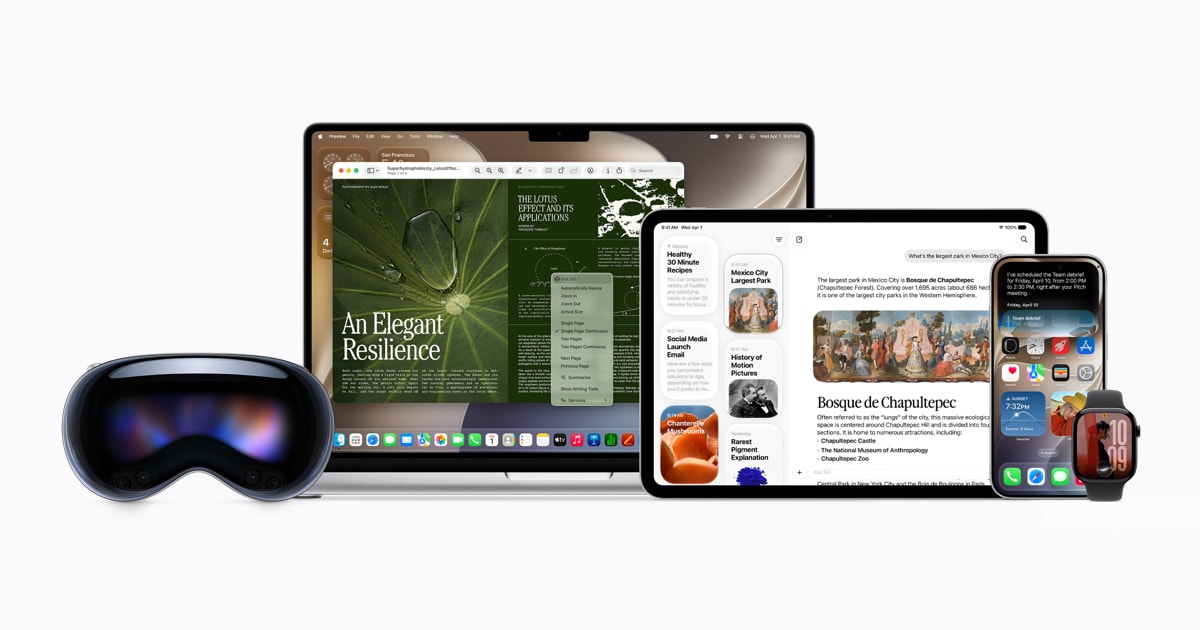
Apple has unveiled Siri AI, a significantly enhanced version of its virtual assistant powered by the company's Apple Intelligence platform. The upgraded assistant features three key technical capabilities: personal context awareness that allows it to understand user-specific information and preferences, expanded world knowledge for more comprehensive query responses, and onscreen awareness that enables interaction with content currently displayed on Apple devices. The new Siri AI represents a major technical evolution from the previous iteration, integrating Apple's proprietary AI models to deliver more contextually relevant responses. The onscreen awareness feature particularly stands out as a technical advancement, allowing the assistant to process and respond to visual information displayed across Apple's ecosystem of devices. This capability suggests deeper integration between Apple's AI systems and its operating system interfaces. The announcement positions Apple more competitively in the AI assistant market, where companies like Google, Amazon, and Microsoft have been rapidly advancing their own AI-powered virtual assistants. Apple Intelligence, the underlying platform powering these capabilities, appears to be Apple's response to the industry-wide shift toward more sophisticated large language models and multimodal AI systems.
Why It Matters
This announcement signals Apple's serious entry into the advanced AI assistant space, potentially challenging market leaders like ChatGPT, Google Assistant, and Alexa. The integration of personal context and onscreen awareness could set new technical standards for mobile AI assistants, while Apple's focus on on-device processing and privacy could differentiate it from cloud-dependent competitors. For enterprise users, these capabilities could transform how professionals interact with Apple devices in workplace environments.
This summary is generated using AI analysis of the original press release. Always refer to the original source for complete details.