Introducing Gemma 4 12B: a unified, encoder-free multimodal model
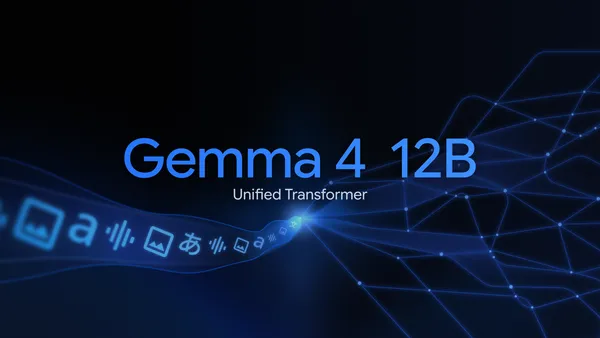
Google has announced Gemma 4 12B, a new unified, encoder-free multimodal artificial intelligence model that represents a significant architectural shift in how AI systems process different types of data. The 12-billion parameter model is designed as a unified transformer that can handle multiple data modalities without requiring separate encoder components, potentially simplifying deployment and improving efficiency for enterprise AI applications. This encoder-free approach marks a departure from traditional multimodal architectures that typically rely on separate encoding mechanisms for different input types like text, images, and other data formats. The model is part of Google's Gemma family of open-source AI models, suggesting it will be available for developers and researchers to implement in their own projects. Technical specifications and performance benchmarks for the new model have not been fully detailed in the initial announcement, but the unified architecture could offer advantages in terms of computational efficiency and ease of integration compared to more complex multimodal systems that require multiple specialized components.
Why It Matters
The introduction of an encoder-free multimodal architecture could significantly impact enterprise AI deployment strategies by reducing computational overhead and simplifying model integration. This approach may lower barriers to entry for organizations looking to implement multimodal AI capabilities, while the open-source nature of the Gemma family ensures broader accessibility for developers and researchers working on AI applications across various industries.
This summary is generated using AI analysis of the original press release. Always refer to the original source for complete details.